800
saplings

Ecological Restoration Project
We are building a living laboratory for ex-situ conservation research of Sequoia
We are building a second
population — in Moldova
The species has one home left. A narrow strip of California, burning faster every decade.
It cannot expand on its own. It cannot adapt fast enough. Without intervention, the range will keep shrinking.
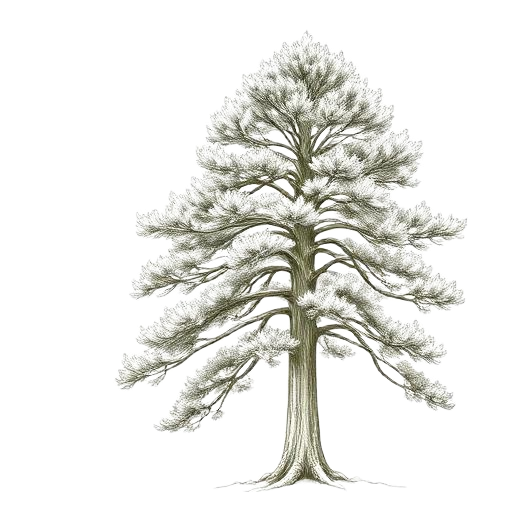
Sequoiadendron giganteum lives for more than 2,000 years. It grows taller than a 25-story building. It is the most massive tree in existence.
Around 80,000 mature specimens remain in the wild. All in California. They have nowhere left to expand.
A single mature tree can sequester up to 2,000 tons of CO₂ over its lifetime — one of the most powerful long-term carbon storage systems on Earth.
Beyond carbon, the Giant Sequoia is a keystone biodiversity asset. Its recovery contributes to measurable species restoration progress under the Kunming-Montreal Global Biodiversity Framework — the most significant international agreement on nature protection since the Paris Accord.


The first experiment happened 10 years ago.
Alexander planted one Giant Sequoia on his property in Moldova.
It survived. It's still growing today.
That was the beginning of Sequoia.md — a long-term species rescue project and a living laboratory for ex-situ conservation research of Sequoiadendron giganteum in Eastern Europe.
Every sapling is grown from seed under controlled greenhouse conditions.
Today the project has grown to 800 saplings and 50 hectares of land waiting to become a forest — where birds, insects, and small mammals will find habitat, contributing to biodiversity and ecosystem balance in the region.


We are conducting a formal assisted migration experiment with Sequoiadendron giganteum outside its native California range. Scientific partnerships for long-term monitoring, biodiversity indicator development, and ecosystem services quantification are open.
The Giant Sequoia can no longer reproduce fast enough to survive California's wildfires.
Moldova provides what California can no longer guarantee. Cold winters that meet the species' dormancy requirements. Soils and drainage compatible with long-term establishment. And one of the lowest forest coverage rates in Europe — under 10% — land that needs exactly this.
And this is not just theory. A Giant Sequoia has been growing here for more than a decade.


This is not a donation programme. It is a long-term ecological restoration operation with measurable outcomes at every stage.
Seeds are sourced from verified Sequoiadendron giganteum specimens. Germination is managed under controlled conditions to ensure genetic viability and seedling health.
Saplings spend their first years in our dedicated greenhouse — monitored, watered, prepared for field conditions. Capacity: up to 25,000 saplings per year.
Land is assessed for soil composition, drainage, and exposure. Planting zones are mapped and prepared to maximise long-term survival rates.
Saplings are planted at spacing that supports canopy development over decades. Each tree receives GPS coordinates and enters our monitoring database.
Growth, survival, and ecosystem indicators are tracked annually. Data feeds into our biodiversity verification process and scientific partnership work.

Sequoiadendron giganteum is listed as Endangered on the IUCN Red List. Recovery requires active intervention — assisted migration, ex-situ conservation, and long-term ecological monitoring outside its native range.
Sequoia.md is designed as a living laboratory. Tracking growth rates, survival, soil interaction, and ecosystem integration across decades. Contributing to the global body of knowledge on sequoia conservation and second-population establishment.
Sequoia.md is being developed in alignment with international conservation and biodiversity frameworks, including the Kunming-Montreal Global Biodiversity Framework and EU Taxonomy for Sustainable Activities. Verification and certification are in progress.
A living tree that may outlive civilisations. Your contribution supports seed sourcing, greenhouse cultivation, site preparation, planting, and long-term stewardship.
Biodiversity contribution your team can see, visit, and report. Aligned with ESG frameworks and GBF Target 4.
Verified species recovery. Aligned with EU Taxonomy and Kunming-Montreal GBF.
Grow your own forest. Sequoiadendron giganteum saplings available across Europe.
Sequoia.md is built with the support of organisations
that believe in what we are doing.





Whether you want to adopt a tree, explore a corporate partnership, discuss biodiversity credits, or acquire saplings — the conversation starts here.